Sunekos Performa & 1200: The Complete Guide to Amino Acid Skin Rejuvenation
4 minRead
Microneedling is one of the most versatile skin treatments available — effective for acne scarring, enlarged pores, uneven texture, and early signs of ageing. Nurse Heather explains how it works and what to expect.
Microneedling — also known as collagen induction therapy — is a minimally invasive skin treatment that uses a device containing fine, sterile needles to create thousands of tiny micro-channels in the skin. These controlled micro-injuries trigger the skin's natural healing response, stimulating the production of new collagen, elastin, and hyaluronic acid.
The result is skin that is firmer, smoother, and more even in tone and texture. Unlike ablative laser treatments, microneedling does not remove the outer layer of the skin, making it suitable for a wider range of skin types and tones — including darker skin tones that may be at risk of post-inflammatory hyperpigmentation from more aggressive treatments.
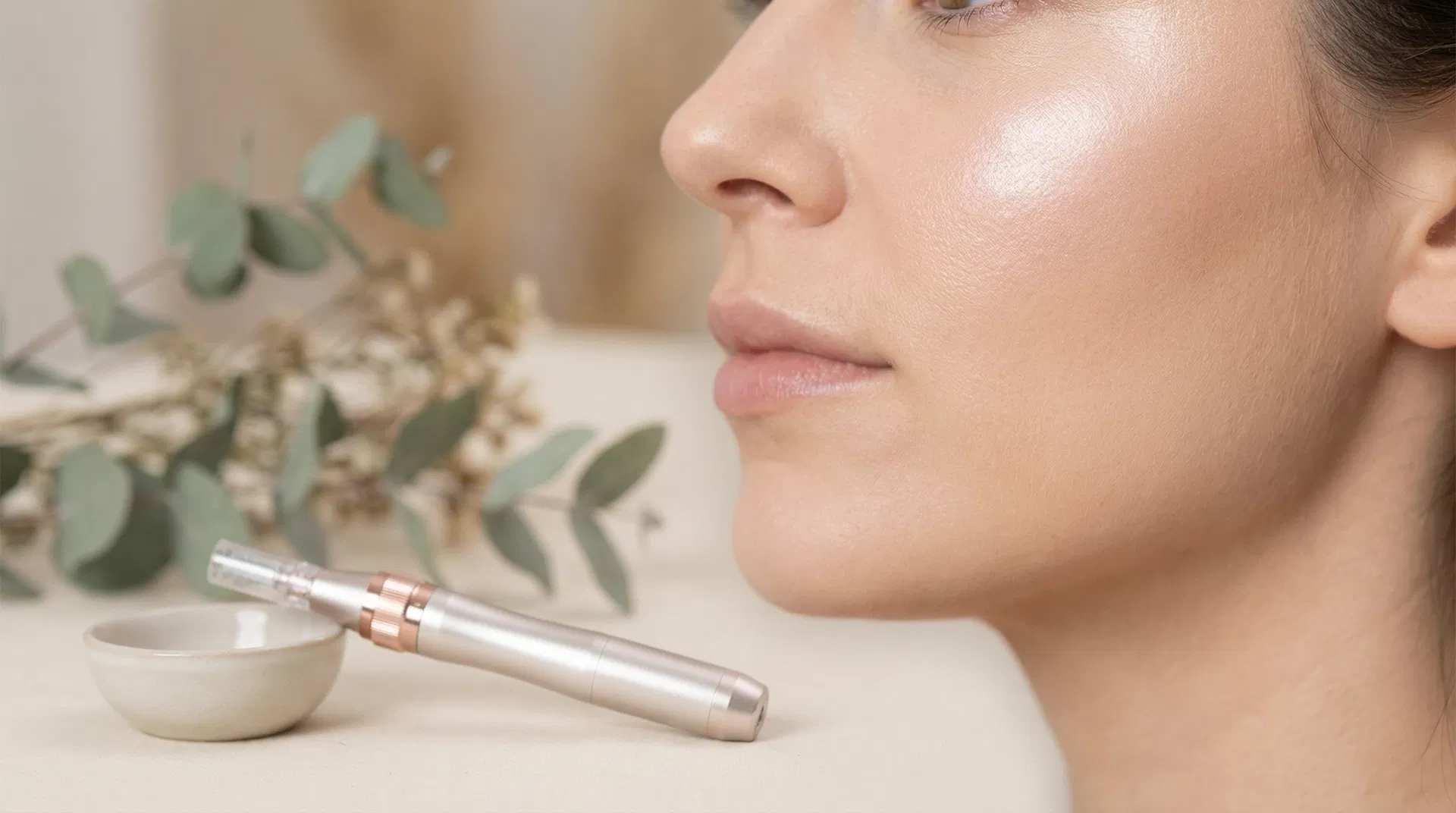
At Skintap, we use the SkinPen Precision — the world's first FDA-cleared microneedling device and the only microneedling device with Level 1 clinical evidence for the treatment of acne scarring. Unlike cheaper dermaroller devices or unregulated "at-home" tools, the SkinPen delivers consistent, controlled needle depth and speed, ensuring both safety and efficacy.
The SkinPen creates vertical micro-channels rather than the tearing motion of a roller, which minimises epidermal damage and reduces downtime. Each treatment cartridge is single-use and sterile, eliminating any risk of cross-contamination.
Microneedling is one of the most versatile treatments in aesthetic medicine. Clinical evidence supports its use for:
A standard microneedling session at Skintap follows this protocol:
The number of sessions required depends on the concern being treated and its severity. As a general guide:
Results continue to improve for up to six months after a course of treatment as the collagen remodelling process completes. Many patients choose to have a maintenance session every 6–12 months to sustain their results.
Microneedling with the SkinPen typically causes redness and mild swelling for 24–48 hours after treatment — similar in appearance to mild sunburn. Most patients are comfortable returning to work the following day, provided they are happy to wear minimal makeup or none at all. Full skin recovery, including any flaking or dryness, typically resolves within five to seven days.
Sun protection is essential in the weeks following treatment. We recommend SPF 50 daily and avoidance of direct sun exposure for at least two weeks post-treatment.
Yes — microneedling combines particularly well with:
SkinPen microneedling at Skintap is priced from £200 per session. Skintap members receive a discount on treatments as part of their membership benefits. To find out whether microneedling is right for your skin, book a consultation with Nurse Heather at our South Woodford clinic.
All treatments at Skintap are subject to clinical suitability assessment. Results may vary between individuals.
Topics
Ready to discuss your skin?
Book a consultation with Nurse Heather at our South Woodford clinic.
Book a Consultation