Sunekos Performa & 1200: The Complete Guide to Amino Acid Skin Rejuvenation
4 minRead
LED Phototherapy uses clinically proven wavelengths of light to treat acne, redness, pigmentation and skin ageing — with no downtime and no pain. Nurse Heather explains how the Dermalux Flex MD works and whether it is right for your skin.
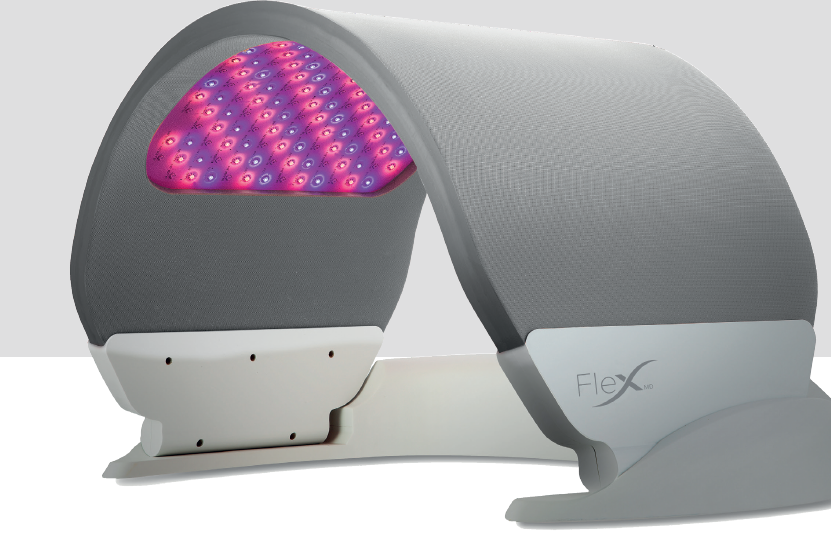
LED Phototherapy has quietly become one of the most talked-about treatments in aesthetic medicine — and for good reason. Unlike injectables or chemical exfoliants, it works entirely with your skin's own biology, using specific wavelengths of light to trigger natural repair and renewal processes deep within the cells. At Skintap, I use the Dermalux Flex MD, which is the most powerful portable LED device available and a Class IIA certified medical device. In this article, I want to explain exactly how it works, who it is suitable for, and how to decide whether it is right for you.
LED stands for Light Emitting Diode. The technology delivers precise wavelengths of light energy to the skin, which are absorbed by the cells and converted into a biological response — a process known as photobiomodulation. Different wavelengths penetrate to different depths and trigger different cellular responses. The key is that the light must be delivered at the correct wavelength and at sufficient power density to produce a meaningful clinical effect.
The Dermalux Flex MD delivers three clinically proven wavelengths:
Blue 415nm — for acne and skin clarity. Blue light targets the sebaceous glands and destroys Propionibacterium acnes (the bacteria responsible for inflammatory acne) without damaging the surrounding tissue. It also has a calming effect on overactive oil production, making it particularly effective for congested and acne-prone skin.
Red 633nm — for collagen, radiance and rejuvenation. Red light penetrates into the dermis and stimulates fibroblast activity, increasing collagen and elastin production. It also increases ATP (cellular energy) production, accelerates tissue repair, boosts circulation and hydration, and reduces the appearance of fine lines and dullness. Most patients notice an immediate improvement in skin radiance after even a single session.
Near Infrared 830nm — for deep healing and pigmentation. Near infrared light penetrates deepest, reaching the subcutaneous tissue. It triggers the wound-healing cascade, reduces inflammation, calms redness and rosacea, and helps regulate melanin production to address pigmentation. Combined with Red 633nm, it delivers advanced rejuvenation benefits that address both surface and structural concerns.
LED Phototherapy is one of the most versatile treatments available because it addresses multiple concerns simultaneously. The conditions it is clinically proven to improve include:
Yes. This is one of the most important things to understand about LED Phototherapy. Because it is non-thermal (it does not generate heat) and non-ablative (it does not damage the skin surface), it is suitable for all Fitzpatrick skin types, including darker skin tones that may not be suitable for certain laser treatments. It is also safe for sensitive and reactive skin — in fact, it is often the treatment of choice for patients whose skin is too reactive for more aggressive interventions.
The only contraindications are photosensitising medications (such as certain antibiotics or retinoids), active epilepsy, pregnancy, and certain autoimmune conditions. I always review your medical history before treatment.
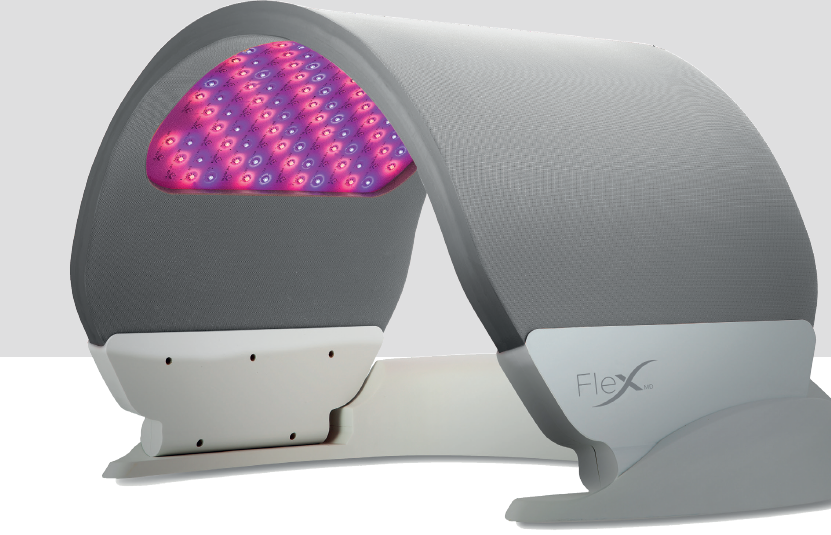
Not all LED devices are equal. The Dermalux Flex MD is a Class IIA certified medical device manufactured in the UK, independently tested to be at least three times more powerful than other portable LED devices. It has won multiple Aesthetics Awards including UK Best Treatment five years running and Manufacturer of the Year. It is FDA cleared and CE marked, with a robust clinical evidence base for acne, psoriasis, wound healing and pain relief.
The difference in power matters because LED Phototherapy is dose-dependent — the therapeutic effect depends on delivering sufficient light energy to the target tissue. A weaker device may not deliver enough dose to produce a meaningful clinical result, regardless of how long the session lasts.
LED Phototherapy is cumulative — results build progressively with each session. For standalone treatment, I typically recommend a course of 6 to 12 sessions, spaced two to three times per week initially, then monthly for maintenance. As an add-on to another treatment (microneedling, chemical peel, or injectables), even a single session delivers meaningful benefits by accelerating healing and reducing post-treatment redness.
Many patients choose to add LED Phototherapy to their existing treatment appointments for just £25, making it one of the most cost-effective ways to enhance your results.
None whatsoever. Each session lasts 30 minutes. You lie comfortably beneath the Flex MD panel while the light works at the cellular level — there is no heat, no pain, and no sensation beyond a gentle warmth. Protective eyewear is provided. You can apply makeup and return to your normal activities immediately after treatment.
LED Phototherapy is a good fit for you if:
It may not be your primary treatment if you have significant volume loss, deep static wrinkles, or structural concerns — in those cases, injectables or biostimulators are likely to be more appropriate, and LED can be used alongside them.
If you are unsure whether LED Phototherapy is right for you, the best starting point is always a consultation. I will assess your skin, discuss your concerns, and recommend a personalised treatment plan — which may include LED as a standalone course, as an add-on, or as part of a wider treatment programme.
Sessions start from £35 for 30 minutes, with courses of 6 and 12 sessions available at a reduced rate. LED add-on to any treatment is £25.
Topics
Ready to discuss your skin?
Book a consultation with Nurse Heather at our South Woodford clinic.
Book a Consultation